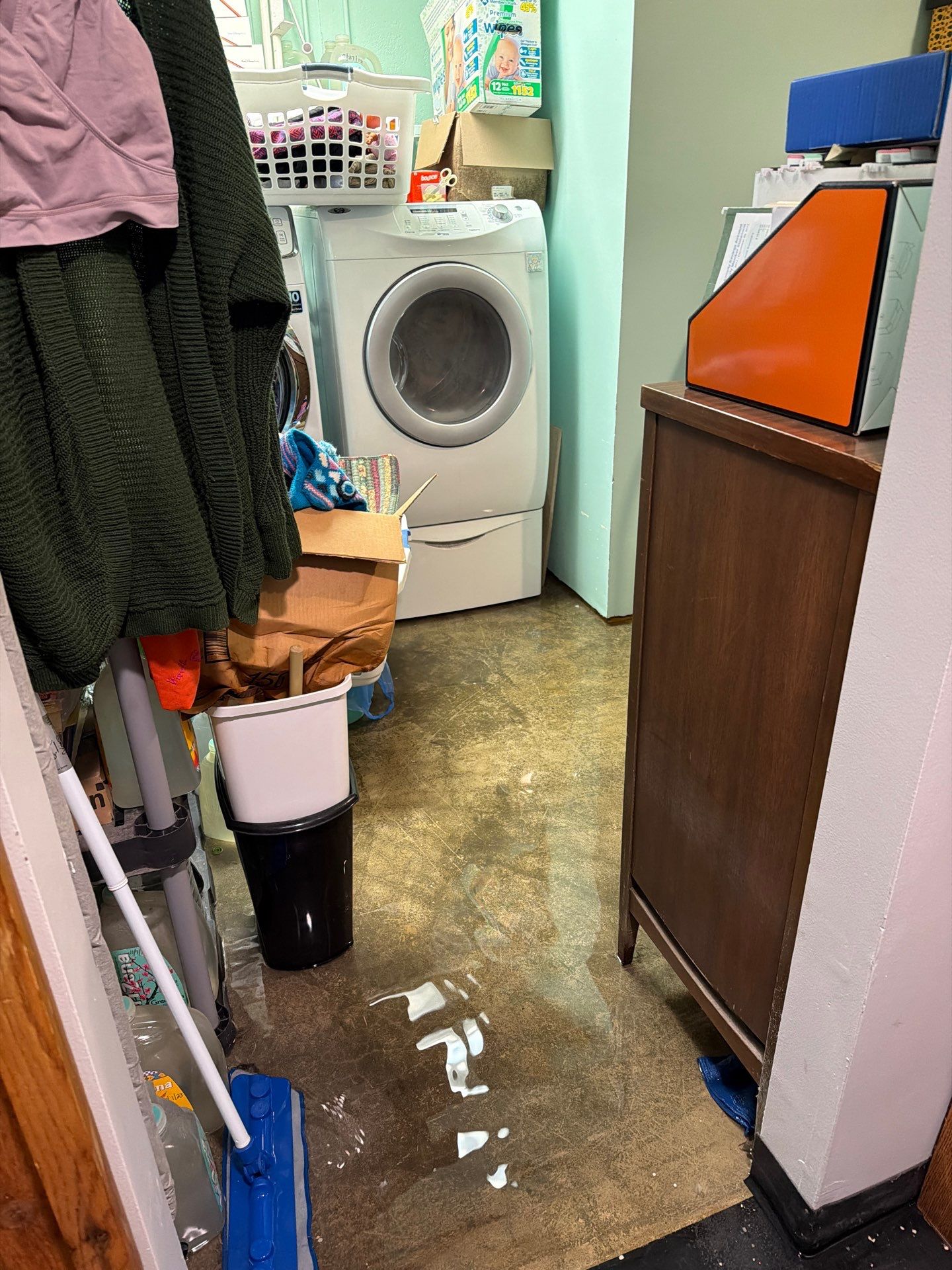
Myth: A Dishwasher Leak Is Always Clean Water
The myth assumes that because the supply line carries potable water, any flood from a dishwasher is Category 1 and safe to handle casually. The reality is more nuanced. The supply side is clean, but dishwashers also hold wash water mixed with grease, food particles, detergent residue, and bacteria from rinsed dishes. Once that drum overflows or the door seal fails mid cycle, you are dealing with Category 2 grey water at minimum. If the flood sat overnight or migrated into porous materials, contamination escalates further. Our crews test and classify every loss using the framework explained in our water damage category guide, because the category drives everything from drying approach to whether materials can be salvaged. We have also seen scenarios where the drain hose backsiphoned from a clogged disposal, pulling sink wastewater back into the dishwasher and out across the floor. That source is solidly Category 2 and sometimes Category 3, and it changes what we can save in the affected zone.
Myth: If the Floor Looks Dry, the Damage Is Gone
The myth says a quick mop and a fan overnight finishes the job. The reality is that visible surface water represents maybe twenty percent of what is actually wet. Dishwasher water wicks sideways into the subfloor, up cabinet kick plates, behind the toe kick into wall cavities, and under adjacent flooring like laminate or hardwood. A moisture meter reading on the surface tells you almost nothing about what is happening two inches down. We routinely find saturated particleboard subfloor and damp insulation in homes where the owner swore the floor was dry to the touch. Thermal imaging and pin meters reveal the truth, and skipping that step is how mold colonies start. In one recent Veedersburg job, a homeowner waited three weeks before calling because the surface seemed fine. By then the subfloor under the dishwasher had delaminated, the adjacent island cabinet had black staining at its base, and we found active mold growth on the back of the drywall behind the unit. What would have been a two day dry out turned into a partial kitchen rebuild.
Myth: Cabinets Always Have to Come Out
The myth says any wet cabinet is a teardown. The reality depends on construction and exposure time. Solid wood face frames with plywood boxes often dry successfully if we intervene quickly, vent the toe kick, and inject air directly into the cavity. Particleboard cabinets that sat in standing water for more than 48 hours usually swell beyond recovery and need replacement. We make that call based on moisture readings and structural integrity, not assumptions, and we will show you the data before recommending demolition. When a single base cabinet does need to come out, we work to preserve the surrounding run so the homeowner is not forced into a full kitchen replacement to match finishes.
Myth: Prevention Is Just About Inspecting the Hose
The myth treats the rubber supply line as the only failure point. The reality includes the inlet solenoid valve, the door gasket, the drain pump, the air gap fitting, and the connection at the angle stop. Replace the supply line with a stainless braided version every five to seven years, but also run the dishwasher empty once a month with the cabinet open so you can spot weeping at connections early. Catching a slow drip is the difference between a wrench tightening and the kind of hidden damage a slow leak can cause over months.
Myth: Insurance Will Not Cover Dishwasher Floods
The myth says sudden appliance leaks are too small or too gradual to file. The reality is that most homeowners policies cover sudden and accidental discharge from a dishwasher, including the resulting damage to floors, cabinets, and drywall. What is typically excluded is the appliance itself and damage from long term seepage you ignored. Documentation matters. Photograph the source, save the failed part, and start the claim quickly. Our office helps customers navigate this on every job, and the process is outlined in our water damage insurance claim guide. Keep the receipt from the original appliance purchase if you have it, since adjusters sometimes ask about age. Policies vary on whether they pay actual cash value or replacement cost on damaged flooring, and that detail can mean thousands of dollars on a kitchen with hardwood that runs through to the living room.
Myth: Running Fans Alone Will Dry Everything Out
The myth treats box fans as a complete solution. The reality is that fans move air but do not remove moisture from the room. Without dehumidification, that evaporated water just resaturates other materials nearby. Proper structural drying pairs air movers with commercial dehumidifiers sized to the affected cubic footage, and the equipment runs continuously for three to five days in most cases. Vinyl plank at the surface typically dries in one to two days, lower drywall in two to three, cabinet kicks and bases in three to four, and particleboard subfloor in four to six. Those ranges reflect typical Central Indiana humidity and slab on grade or crawl space construction, and they assume Veedersburg Water Restoration sets equipment within hours of the loss. Wait a day and the timeline stretches because materials have absorbed deeper. Veedersburg Water Restoration crews are typically on site within 2 hours of the call, which is the single biggest factor in keeping drying short.
Myth: Turning Off the Dishwasher Stops the Flood
The myth assumes the appliance switch cuts the water. The reality is that the supply line stays pressurized whether the dishwasher is running or not. If the leak is at the inlet valve, the braided line, or the connector under the sink, water keeps flowing until you close the angle stop valve behind or below the unit. Every adult in your home should know where that shutoff is before a failure happens. If you cannot find it or it is seized open, your main water shutoff is the next line of defense. Take five minutes this weekend to open the sink cabinet, trace the line that runs sideways to the dishwasher, and confirm the valve turns. Older quarter turn valves can freeze in place from years of disuse, and the worst time to discover that is at midnight with water spreading across the kitchen floor.
Myth: A Newer Dishwasher Will Not Leak
The myth is that recent purchases come with reliability guarantees built in. The reality is that we respond to failures on units that are six months old as often as units that are fifteen years old. New installs can leak from an over tightened compression fitting, a kinked supply line behind the unit, or a drain hose that was never properly secured to the high loop bracket under the sink. Manufacturing defects in inlet valves show up early too. The lesson is to inspect under the sink and behind the kickplate within the first month after installation and again every six months, regardless of how new the appliance is.