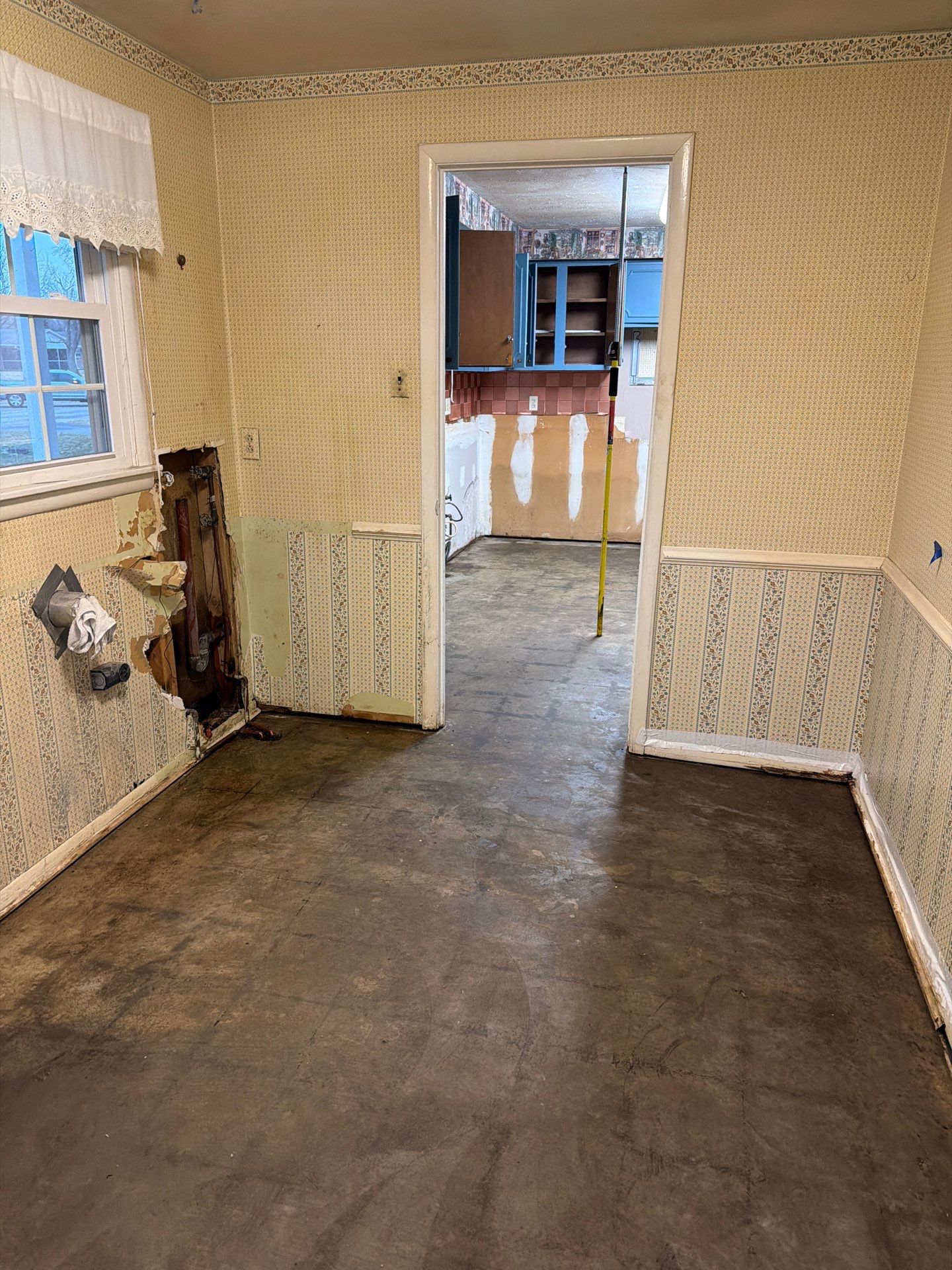
Why Non-Invasive Detection Matters Before Anyone Picks Up a Saw
Every square foot of drywall removed is square footage you will pay to replace, repaint, and retexture. In a typical Veedersburg home with painted drywall and standard insulation, opening and closing a single eight by eight inspection hole runs between $180 and $400 once you factor in patching, priming, and texture matching. Open six of those chasing a mystery leak and you have spent more on cosmetic repair than the plumbing fix itself. Worse, exploratory demolition disturbs dust and any latent mold, which under S520 protocol then requires containment that was not necessary five minutes earlier.
Non invasive detection flips that math. The goal is to localize the leak to within a few inches before the first cut, confirm whether the line is pressurized supply or gravity drain, and map the wet footprint so the drying plan is built around real data. The tools below each do one part of that job. None of them does all of it, which is why a competent technician carries three or four and cross checks readings before calling the location. You can read more about how we approach moisture mapping with thermal imaging as part of that workflow.
There is also a timing dimension that homeowners often underestimate. A leak found at the localization stage, before saturation has wicked up studs or down into the bottom plate, can frequently be dried in place with targeted air movement over three to four days. The same leak discovered after a week of guesswork demolition tends to require flood cuts, insulation removal, and antimicrobial treatment that push the job into a full mitigation file with the carrier. The further upstream you catch it with non invasive tools, the smaller the eventual scope. That is true whether the source is a pinhole in a copper riser, a failed shower pan liner, or a slow weep at a nail pierced PEX line behind a baseboard.
The Detection Methods Compared Head to Head
The table below reflects what we see on real Veedersburg jobs, not lab conditions. Accuracy is how close the method gets you to the actual leak point. Wall damage risk is how much of the surface gets disturbed if you rely on that method alone. Cost is the typical add to a leak detection visit, not the full repair.
| Method | What It Detects | Accuracy | Wall Damage Risk | Typical Cost Add | Best Use Case |
|---|---|---|---|---|---|
| Infrared thermal imaging | Temperature anomalies from wet material | Within 6 to 12 inches | None | $0 to $150 | Initial mapping of wet zones |
| Pinless moisture meter | Moisture content through paint and drywall | Within 4 to 8 inches | None | $0 to $100 | Confirming thermal findings |
| Pin type moisture meter | Exact moisture percentage at depth | Within 1 to 2 inches | Two pinholes per reading | $0 to $75 | Quantifying severity, drying targets |
| Acoustic listening device | Pressurized leak hiss or drip sound | Within 2 to 6 inches | None | $200 to $450 | Active supply line leaks |
| Tracer gas (helium or hydrogen) | Gas escape point from line | Within 1 to 3 inches | None | $350 to $700 | Slow or intermittent leaks |
| Borescope camera | Visual confirmation through small hole | Direct visual | One 5/8 inch hole | $100 to $200 | Final confirmation before larger cut |
| Exploratory demolition | Whatever you happen to expose | Variable | High, multiple square feet | $400 to $1,500 in repair | Last resort only |
What to Have Ready When You Call
A productive detection visit starts with a few details the homeowner can gather in minutes. Note which fixtures were running when the stain first appeared, whether the spot grows after showers or only after laundry, and whether the water meter dial spins with every fixture closed. Photograph the affected wall in daylight and again with a flashlight held at a low angle, which often reveals subtle bulging. Locate your main shutoff and confirm it actually turns. With that information in hand, the technician arriving at your Veedersburg home can narrow the suspect list before the first reading, shaving thirty to sixty minutes off the diagnostic phase and getting drying equipment in place that much sooner.
Where Non-Invasive Detection Has Limits
Honesty matters here. Thermal cameras struggle when wall cavities are cold throughout, such as on an exterior north wall in February, because the differential the camera reads can flatten out. Acoustic tools lose signal in homes with PEX rather than copper because the plastic dampens the leak hiss. Tracer gas requires isolating and draining the suspect line, which means shutting off water for an hour or two. And none of these tools tells you the condition of the framing or insulation behind the wall, which is where our crew transitions from detection into the actual restoration described in our plumbing leak wall and floor repair walkthrough. Once we locate the failure and the plumber has made the repair, the drying phase begins, and that work follows the same S500 standards regardless of how the leak was found. If you suspect a leak but have not yet seen visible damage, the early detection signs guide is a useful starting point before you call anyone.
Reading the Table: What the Numbers Actually Mean for You
Notice the accuracy column. Thermal imaging alone gets you to within a foot, which sounds good until you realize a foot of drywall covers most of a stud bay and the leak could be on either side of a vertical pipe run. That is why we pair it with pinless moisture readings on a grid, then confirm with pin readings at the wettest point. Acoustic and tracer gas methods are the precision tools for supply line leaks, where pressure is constant and the failure is small enough that the wall stain has not yet developed. For drain leaks, which only release water when a fixture runs, tracer gas pressurized into the drain often beats every other method.
The cost column rewards a second look as well. A full detection workup using three or four methods rarely exceeds the price of a single unnecessary repair patch, and it produces documentation that adjusters accept without question. When Veedersburg Water Restoration arrives, in most cases within 2 hours of your call, the technician brings the full kit rather than guessing which tool the situation needs. That up front investment in diagnostics consistently saves homeowners money on the back end, particularly in older Veedersburg neighborhoods where plaster, lath, and layered paint make every patch more expensive than the same repair in a newer build.