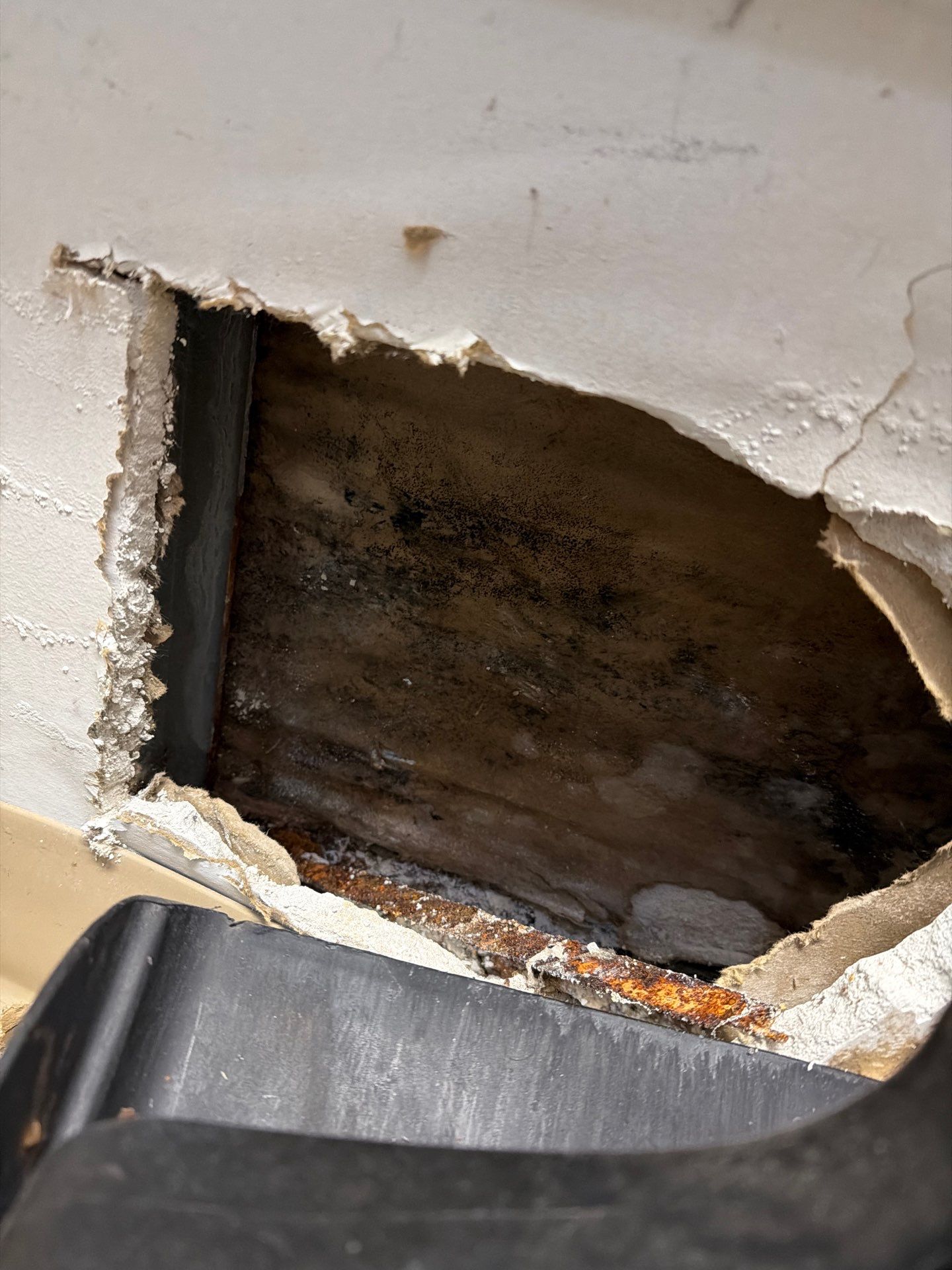
Hidden leaks behind walls usually fall into three categories, and recognizing which one you are dealing with changes everything about how the problem gets solved. The first is a slow supply line leak, often at a copper joint, a PEX fitting behind a shower valve, or a corroded shutoff under a sink that drips back into the wall instead of forward into the cabinet. These leaks run constantly under pressure, so even a pinhole pushes out several gallons a day. The second is a drain line leak, which only releases water when something upstream is being used, like a tub draining or a washing machine cycling. Those are sneakier because the wall has time to partially dry between events, masking the real volume of damage. The third is exterior intrusion, where flashing around a window failed, a roof valley is dumping water behind siding, or a brick veneer is wicking moisture inward during the long stretches of freeze and thaw we get across Veedersburg winters.
The clues your house gives you are subtle until they are not. You will notice baseboard paint that looks slightly bubbled, or nails that have started to pop out of drywall in a vertical line tracing a stud bay. Wallpaper seams may lift. A faint tide line, often yellow or tan, can appear a foot above the floor where capillary action pulled moisture upward and deposited minerals. Hardwood right at the base of an interior wall will cup or crown before the wall itself looks wet, because the floor absorbs faster than painted drywall. And then there is smell. Mold inside a wall cavity produces a distinctive earthy odor that gets stronger when the HVAC cycles, because air pulled through the wall cavity carries spores into your return. Some homeowners also report a sudden uptick in their water bill of fifteen or twenty dollars without any change in usage habits, which is often the first measurable hint of a supply side leak running quietly day and night. Pets sometimes notice before people do, sniffing or scratching at a baseboard that looks perfectly fine to the human eye.
How Professionals Actually Find the Leak
When Veedersburg Water Restoration arrives at a Veedersburg home, we do not start by cutting holes. We start with non-invasive tools, because the goal is to confirm moisture, map its extent, and pinpoint the source before any demolition. A calibrated moisture meter, both pin-type and pinless, lets us read the moisture content of drywall and framing through the surface. Healthy drywall reads under one percent. Anything above sixteen percent in wood framing or above one on the relative drywall scale means active wetting. We then sweep the suspect area with an infrared thermal camera. Water cools surfaces through evaporation, so a wet stud bay shows up as a cold blue stripe against the warmer dry wall around it. That alone narrows a vague problem down to a two-foot section.
From there we use acoustic listening equipment on pressurized supply lines if we suspect a pinhole, and we may introduce a small amount of harmless tracer if the leak only appears during fixture use. For exterior intrusion we will often pull a piece of trim or remove an outlet cover to inspect the cavity with a borescope, which is a tiny camera on a flexible cable. That single small hole tells us more than tearing out a four-foot section of drywall would. The whole detection process usually takes between forty-five minutes and two hours depending on the size of the home and how many areas show readings. If you want a fuller picture of how this fits into a larger response, our guide to water damage restoration cost and price breakdown covers what each phase typically runs.
What Homeowners Can Check Before We Arrive
There are a handful of safe things you can do on your own that will speed up the diagnosis when we get there. Locate your water meter and take a reading, then avoid using any water inside the house for two hours and read it again. If the dial moved at all, you have a supply side leak somewhere, and that single data point saves us thirty minutes of testing. Walk the perimeter of the suspect wall and gently press on the drywall every few inches with your fingertips. Soft or spongy spots tell us where saturation has reached the gypsum core. If the wall is on an exterior face, step outside and look up at the roofline, the gutters, and any penetrations like dryer vents or hose bibs directly above the stain. Photograph anything that looks off, including caulk lines that have separated or weep holes in brick that are blocked. None of this replaces professional detection, but it gives us a head start and often shortens the visit by a meaningful amount.
What Happens After Detection in Veedersburg Homes
Finding the leak is only the start. Once the source is confirmed, a plumber repairs the supply or drain line, or a roofer addresses the exterior failure, and then the restoration side begins. Wet insulation has to come out because fiberglass loses its R-value once saturated and cellulose turns into a mold farm. Affected drywall is cut back to the nearest dry stud bay, usually in clean horizontal lines twenty-four inches up from the floor, which makes replacement easier. Framing gets dried with directed airflow and dehumidification, and we monitor moisture daily until readings match unaffected areas of the house. If mold has already established, which is common when the leak ran for more than seventy-two hours, the affected materials are removed under containment with HEPA filtration. Our broader process is detailed on the water damage restoration service page.
Cost is the question every homeowner asks, and the honest range for hidden leak work in Veedersburg is wide. A small isolated leak caught early, with maybe four feet of drywall replacement and two days of drying, often falls between $1,200 and $2,800. A leak that ran for a month inside an exterior wall with insulation removal, mold remediation, and twelve linear feet of finish work can reach $6,000 to $11,000. Insurance will usually cover the resulting damage if the leak itself was sudden and accidental, though they will typically exclude the failed pipe or fitting. We document everything with thermal images, moisture maps, and photos so your adjuster has what they need, and we are happy to speak with them directly if questions come up during the claim. If the source turns out to be sewage related rather than clean water, the path changes significantly and you can read more on our sewage cleanup overview. If we look at your situation and decide the damage is cosmetic and a handyman can handle it for a few hundred dollars, we will tell you that directly rather than sell you a job you do not need.